The Gnostic Teachings of Christ: Jung the Gnostic Prophet
Michael Ebbinghaus • December 23, 2025
Resurfacing the Buried Flame

Listen to this Article Narrated by the Author
To review, so far we have discussed Gnostic Christianity, the mystical injunction made by Christ to awaken to our living identity and relationship to the Father, and how the union with the Father is achieved through a descent into Hell or the Underworld. This entails an embrace of the primordial layers of our being that religious dogma prevents us from moving towards: through the dark underbelly that lies beneath the world of appearances, and the golden light which courses through all the events and identities we would most like to forget.
This is why the core of Christ’s teaching is not simply kindness and generosity
towards others, and certainly not a dogmatic and sheepish acceptance of imprisoning him within the solitude of prophetic suffering. It entails a dramatic descent through the parts of our being that we have not learned to accept and care for, and in that great morass finding the greatest relinquished pearl of all.
It has always been the task of prophets to keep alive what tarnishes in human hands. We can be theives in the night, taking only what we deem is valuable while leaving the most precious jewels undisturbed. The thread must be carried by a living tradition, and the Gnostics took on that task: the task of suffering alongside Christ and descending through our own personal and the collective Hell world – through the worlds of our own discarded history and character, as well as the transpersonal realm of suffering.
Gnosticism became alchemy, and alchemy would spawn the naturally inquisitive spirit which would come to exemplify the modern sciences of chemistry, physics, biology, and eventually, psychology. However, through this transformation, and in no small part owing to the dogma-fueled consolidation of power in the Church, Western civilization began to turn away from there being an unseen world at all, no less a wise creator. And in a strange twist of irony the forces which sought to liberate us from dogma imprisoned us into another: that of so-called scientific objectivity.
"It has always been the task of prophets to keep alive what tarnishes in human hands."
The thread must be carried, and carried in a time that is incredibly hostile to the spiritual or intuitive perspective. In order to sew a truly religious perspective – religio in the true sense of “re-membering” – into modern awareness, a succession of powerful spells must be cast using all the tricks a sorcerer has in his bag: namely the powers of sight, persuasion and her companion, deception. You must be a sorcerer while concealing yourself as a sorcerer, speak prophetically though deny any involvement whatsoever with such esoteric nonsense.
None did this so masterfully in the collective consciousness in our day as Carl Jung.
The Disappearance of Mythical Validity
Western rational consciousness has done a lot to diminish the vitality of many things. It is exceptionally myopic
and cannot realize that just because mechanical means exist it does not mean that everything can be based in them. It is fine to assert that you will pursue a course of study which examines only the consensus reality, the world of phenomena
or phe-noumena, “on top of the numinous/divine.” To forget this assumption and demand all our endeavors adhere to it is lunacy, a willing disposal of reality.
I believe we can see this most aptly in our own time as our people suffer the consequences of a much smaller segment of our people getting more and more absurdly rich.
Jung was preeminent among our collective figures in understanding what happens when one model of reality, especially one as narrow as materialism, predominates over all others. First Christianity then scientific empiricism systematically eliminated the thick flowing roots of primordial tradition. When these are severed, people lose sense of themselves as whole. There are few elders with whom we can discuss the grand task of our lives.
Jung’s career began when the glorious inquisitiveness of the Enlightenment had petrified into a force of cultural stultification
– God, religion, all those superstitions and rites of our ancestors (e.g. advanced consciousness technologies) - are not the way forward. They have only weighed down our forebears, we alone have evolved to the point of reason to leave all that silly nonsense behind. Jung would have his “encounter with the Unconscious” precisely 30 years after Nietzsche proclaimed that “God is dead and we have killed Him.”
But this respect and recognition would not wane from Jung’s eyes. He trusted the Unconscious more deeply and did not regard it as the wastebasket of consciousness as did his mentor, Freud. He knew there was something more mysterious behind it, and the strength of his conviction led him to make a stand that would cost him his relationship with Freud, including the prized heirdom of psychoanalysis.
And it is in the wake of this fissure that Jung would find his teachers: the fount of images and affects that came flooding in – so much so that at times he had to grip the table in front of him, holding on for dear life – and the mythic and otherworldly figures he would meet with there, preeminently the one he referred to as “[his] Father,” Philemon.
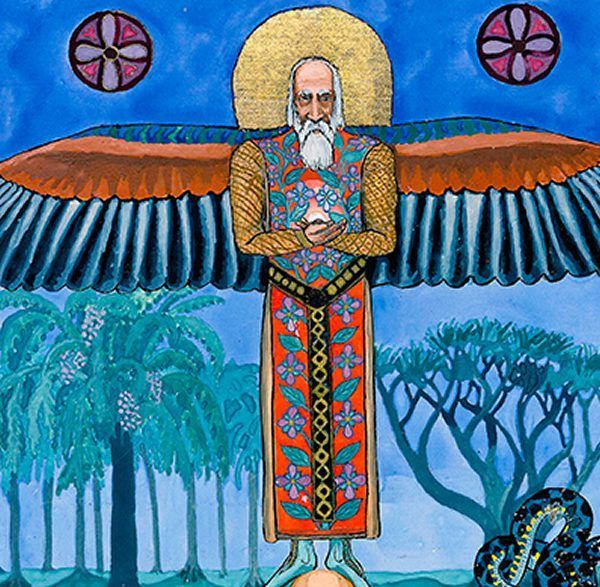
Jung the Psychologist (Personality No. 1)
One of the principle things Jung stressed about himself was his duality. He described a “spirit of the depths”
which was in dynamic tension with the “spirit of the times”
(Jung, 1961). Jung realized this tension was necessary, and that one can play one’s spirit of the times (e.g. personality No. 1) with the grace of a seasoned actor when one’s center is in the spirit of the depths.
However, Jung very much considered himself a scientist, but he meant this by what the term used to
mean. That is, he was looking at all the facts, not just the physical happenings that others could verify immediately. Again and again he stresses throughout his writings that exploration of the psyche is an exploration of empirical fact
(Jung, 1947), not in the sense that our affects, thoughts, and feelings about things are necessarily correct or justified, but that we experience these affects in relationship to deeper rumblings within our being. Unbeknownst to us, these familiar yet often paradoxical behaviors lead us to a psychic function that we do not yet know.
This is the path of individuation, exact in its spirit and its methods to its arcane predecessors, but updated for modernity – a new chapter in the Biblical canon that reveals once and for all the Book of Mormon
as a cheap fake. Its goal is the same as gnosis or the alchemical procedure.
So Jung was a scientist, and much more a scientist that those only willing to boast the dogma. So is anyone willing to regard the psyche as an empirical fact. We are scientists in the ancient sense
– investigating into the inner workings of the Universe, which invariably leads us to explore the wide world within.
Jung the Mystic (Personality No. 2)
When most of us speak of Jung, we speak with reverence to this part of himself that he was able so fully to inhabit. His followers still offer him the sacrament of service and, according to Peter Kingsley, dilute his works so that they’ll be palatable to the materialist consciousness Jung was so vehement in warning us about.
There is an air of mystique around Carl Jung, an ever-present scent of synchronicity. Almost nothing could get past him (and he’d be delighted if someone could!). His patients and analysts testify at length to his uncanny ability to predict things before they would happen, lay all these clever traps for people to fall into.
In short, it was great therapy.
But this only brushes the surface, and such fascinating anecdotes are won at the hard expense of tremendous personal suffering and the outcasting that results from seeing what is only too obvious.
Most of us stay within the realm of personality No.1, our spirit of the times, and more than a few have no clue about personality No. 2. Even those of us that have this sense often struggle, so remember the dynamic tension I mentioned between these two personalities. Tension is not an abberation but what is needed, what drives all manner of growth – psychic, material/technological, emotional, etc.
Growing into personality No. 2 has always meant death. Death, dismemberment, re-memberment, and resurrection are all themes associated with this journey cross-culturally. In our own time that offers no pathways to mythopoetic initiation and that only honors personality No. 1, this process is particularly confusing, painful, and perilous.
"Most of us stay within the realm of personality No.1, our spirit of the times, and more than a few have no clue about personality No. 2."
In many ways we are forced into the same confrontation. Though I would not compare it fully to Jung’s experience, we all have felt the solitude that he knew so deeply. We have looked for mentors and been found wanting, so we are driven back to ourselves and our inner world, but with fractured attention and instability which make it very difficult to apprehend the subtleties of the inner world.
Jung the Gnostic Psychologist
While Jung maintains his scientific attitude and identity as a psychologist, it is clear from his writings and people’s many experiences of his uncanniness that he was a healer and prophet belonging to a lineage of Christian and Western mysticism, which included such esteemed members as Enoch, Elijah, Empedocles, and Mani
(Kingsley, 2018).
Jung was vociferous on issues of the present state of the Christian Church, particularly in his later years, berating them for their “stiff-neckedness and pig-headedness” (Jung, 1955), their total inability to reconcile the forces of good and evil within them, to even recognize the latter at all.
Stiff-neckedness and pig-headedness are manifestations of the great psychic epidemic of our time, an increasingly unilateral worldview
that grows more and more distant from the roots which offer it vitality. It does not belong to just the spiritually faithful, but is a constituent element of many large groups of people. This gives further evidence to the impact of Christianity on the psychology of Westerners. Whether fundamentalist Christian or ardent athiest, people behave in a religious, if not dogmatic, fashion
in regards to their own most cherished ideals.
These dynamics correspond to the Cyclops and the Tower. The Cyclops for its narrowness of vision, lacking any sort of depth, and the Tower for its lofty distancing from flesh and blood matters, a smugness
and superiority. These symbols are combined in the image of Sauron’s tower, Barud-dûr, in The Lord of the Rings. Principled to one thing and one thing only, scouring the land for weakness to root out and exploit.

Such dogmatic modes of thinking afford no ability to reconcile with the psychological Other.
Coming to know this psychological Other constitutes the entire basis for Jung’s therapy. He knew it was healing, and he knew that Westerners were not going to like it. If revealed out the outset, they would reject it outright. If planted secretly in the night, the fruit might reveal what they have been searching for all along.
The Challenges of Resurrecting Mysticism in a Materialist Society
Jung was faced with an unfathomable and lonely Truth: if he was to be successful in his mission, his “Sermon on the Mount” would have to take the form of lectures and scientific writings, dutifully and intricately cloaked. The secret would be his presence and his relationship to the psychological Other within him.
Jung understood that the Unconscious is not unconscious. It is not the repository where consciousness keeps all its bad news but is the fount from which consciousness arises, a consciousness which blossoms to a new level in humanity. In reality the Unconscious is supraconscious.
Gnosticism would arise out of Judeo-Christian mysticism and flower into the arcane science of alchemy. Alchemy would become chemistry, at which point the mystical thread of these traditions goes underground.
"Stiff-neckedness and pig-headedness are manifestations of the great psychic epidemic of our time, an increasingly unilateral worldview that grows more and more distant from the roots which offer it vitality."
To resurrect this mystical root in a time that is violently opposed to consideration of the inner worlds (think roots trying to push up through concrete and asphalt) seems an impossible task. Jung would have to embody this scientific attitude with regards to the inner world, maintaining scrutiny in his methodology and satisfying the spirit of the times. serving the purpose of creating a space in which a mystical renewal can take place. The teachings of alchemy remained unassimilated until Carl Jung was able to identify the real goal of the procedure, and to realize with great surprise that his analytical psychology followed the procedure’s spirit to a t, though the external methods might have looked somewhat different.
For Gnosticism, it was the mystical union with Christ, God, the Devil. The alchemists described it as the coniunctio, or “joining,” the hieros gamos or “holy marriage.”
For Carl Jung, his was just another label on an eternal process: individuation.
Jung’s Therapy as a Gnostic Treatment
Jung was never overtly concerned with curing trauma in the sense that we are today. To him such healing was incidental
to the procedure. It required all of oneself, especially the parts we are wont to deny. One’s compassionate heart, ruthless bloodlust, stunning wisdom, and daring foolishness
are of equal importance. It is easy to see the preferences our society holds as well as their manifestations in the Shadow.
Jung’s task was to show the reality of a person to themselves in a way that could not be mistaken. His work was not so different from that of Socrates, going around and festering out everyone’s deepest insecurities and biases. There is nothing more life-sustaining
than helping a person bridge into their own awareness so that they can consciously take up their own task of individuation.
This requires a deep compassion, yes, but it also requires speaking truths which might hurt, which the person seeking help is inclined to reject.
"The shadow necessarily serves as the road to the numinosum..."
This is the descent into Hell that we described in the previous article, and anyone familiar with Jungian psychology will recognize it immediately as shadow work.
But shadow work is not about bettering yourself, not about eliminating the shadow. Within the shadow is contained all one does not know about oneself, including the most cherished secrets
we buried away from our own sense of ourselves. The shadow necessarily serves as the road to the numinosum, to this path of the Inner One – something in which both our highest and lowest potentials across lifetimes are personified
– a transpersonal and supraconscious being.
Spiritual Growth Requires Life
Dialoguing with this internal teacher is not meant to take the place of living one’s life, but to live it most excellently. Esoteric instruction, contrary to popular belief, offers exoteric practicality
in addition to its vital-spiritual components. Coming into relationship with this suprapersonal Other
within means a dutiful respect to the instructions that it carries, taking one’s dreams and life experiences as reflections of oneself
and one’s place in the cosmic web, then going one deeper to where that place is personified en toto, existing and waiting for us to step into it, alongside the many alterations in our awareness and perspectives that will accompany this.
The trouble of trying to treat anything directly, including trauma, is the fixation upon it, the attachment. There is the danger of identifying primarily as a traumatized individual, rather than as that which survived and managed well enough to integrate it to a later date. Jung’s veiled gnosis introduces the individual to that field in which was sewn their trauma, or their sacred wound, which would introduce them to the fundamental place in themselves where their deepest soul dwelleth
as well as the niche carved out for them in the grand ecology
of being, meaning, life and death.
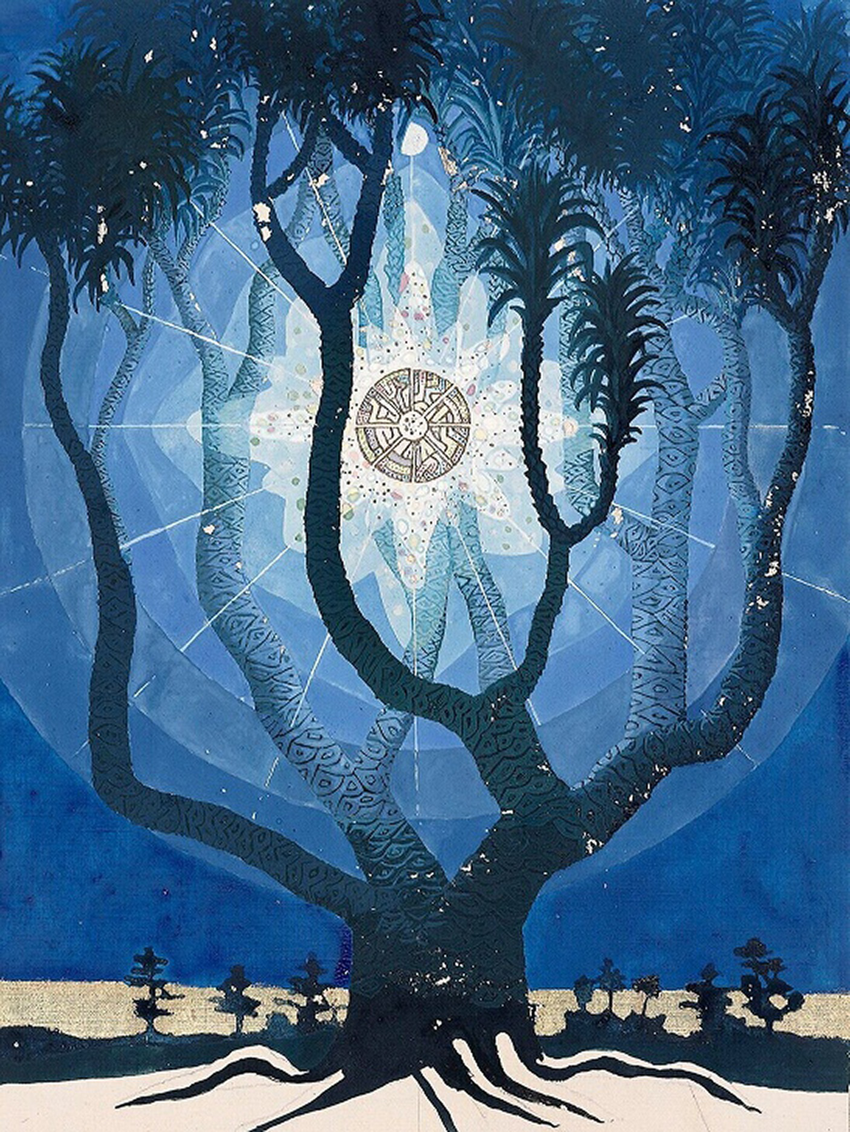
Jung the Prophet
Jung was persistent in describing all religions as “psychotherapeutic systems” (Jung, 1937). Jung’s psychotherapuetic system would end up being the religion that the world did not know was needed. And indeed, many mistook it for the “bow down and worship” kind of religion, where you accept the postates of the Master and dutifully bow down to them. Despite his myriad attempts to get even his closest followers to see the truth, Jung would always report incredibly loneliness amongst his apostles (Kingsley, 2018).
This task is fundamentally concerned with the preservation of humanity, which is how Christ is often described – as the Preserver of the World. Jung’s task set him in accordance with this mission. If humanity is to continue, it must have a means of investigating the depths. His Red Book, self-titled as Libra Novus
or “New Book,”
is the next chapter in our collective mythology, a bridge from the old and new testaments into the present day.
Thus, Jung’s status as a prophet stands above those of St. Thomas Aquinas, Meister Echart, for his ability to substantiate such a profound effect on the culture within his lifetime. He found a way to make it assimiliable to Western consciousness. Even if the hordes would confuse his message and dilute the Shadow to “shadow work” and young intellectual snobbish men talk about the wantonness of their “anima,” without ever letting what sits behind the veil tear it apart, Jung’s work holds a particular sway in our collective consciousness, and many of us have no idea to what extent…
"Faith is not merely believed in but built up over a lifetime. Nothing else will do."
Thus Jung’s work is in league with Christ, perhaps even stands on His shoulders. This is tricky, as observing this ruffles a lot of tender feathers. The cooperation is not seen; there are some who cannot tolerate any outdoing of the Savior.
But that’s to miss the point, and it points us to the maddening bias in our consciousness
to regard lower parts of the ladder as morally inferior to the higher rungs. Because Jung continues Christ work, it does not diminish Christ, but brings that shared work to a deeper completion. So it is with the so-called “lesser” prophets I mentioned earlier.
We are not redeemed by petty beliefs, good advice
or rationale. We are redeemed by contact with the primordial within us, the Uroffenbarung, who teaches us our actualities, tends our wounds, and pushes us towards the task of our lives. Faith is not merely believed in but built up over a lifetime. Nothing else will do.
The ramifications of our failure to take up the task are too dire to discuss in the space we have left here.
Conclusion
Christ injuncts us to look within, to see ourselves in the light of His divine compassion
and meet the parts of ourselves that we fear and are ashamed of, to descend through the many layers of ourselves to see what it is that we are really made of, and how we are meant to carry out the task of redeeming Humankind.
All of us are implicated, all of us responsible. In our own ways we carry out the task of covering things over with falsity, disguise our intentions to suit our idea of ourselves, following dogma rather than the soul. Without knowing what lies at the base of your own awareness, you might as well be walking in a blizzard.
Our blindness has exacerbated more and more with each passing year.
Sources
Jung, C.G. (1937). Psychology and Relgion. Yale University Press.
(1947). On the Nature of Psyche. Bollingen Press.
(1955). Mysterium Coniunctionis. Bollingen Press.
(1961). Memories, Dreams, Reflections. Crown Publishing Group.
Kingsley, P. (2018). Catafalque: Carl Jung and the End of Humanity. Catafalque Press.
Wilber, K. (1995). Sex, Ecology, Spirituality: The Spirit of Evolution. Shambala Publications.
The Sentient Soul

Learn why dream dictionaries often miss the deeper meaning of dreams and discover a Jungian approach to interpreting dream symbols and active imagination.

Discover the meaning of recurring dreams through a Jungian lens. Learn why recurring dreams and nightmares happen, what they reveal, and how dreamwork supports healing.